सर्वासामपि सिद्धीनां सिद्धिः कृष्णस्य सन्निधौ |
जगतामेव वन्द्यत्वं वासुदेवस्य कीर्तितम् ||
एते चांश कलाः पुंसः कृष्णस्तु भगवान् स्वयम् |
इन्द्रारिव्याकुलं लोकं मृडयन्ति युगे युगे ||
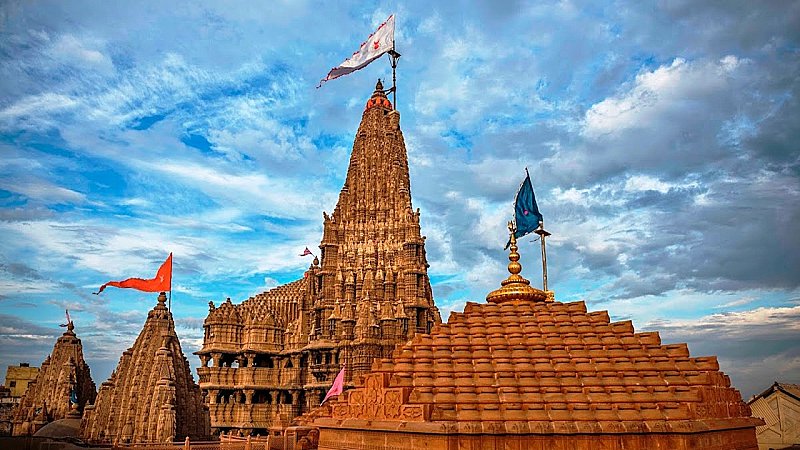
Dwarkadhish Temple, also known as the Dwarka Temple, is one of the most revered Hindu temples in India. Located in the ancient city of Dwarka in the state of Gujarat, this temple is dedicated to Lord Krishna, who is worshipped here as King Dwarkadhish. The temple holds great religious significance as it is believed to be one of the four sacred Char Dham pilgrimage sites and one of the seven most ancient religious cities in India.
The temple is said to be over 2,500 years old and stands majestically on the banks of the Gomti River. Its impressive five-story structure is supported by 72 pillars and features intricate carvings and sculptures that depict various scenes from Hindu mythology. The main shrine houses a black stone idol of Lord Krishna, adorned with fine clothes and jewelry, symbolizing his royal stature.
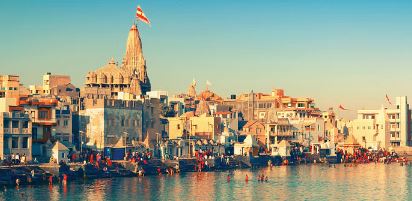
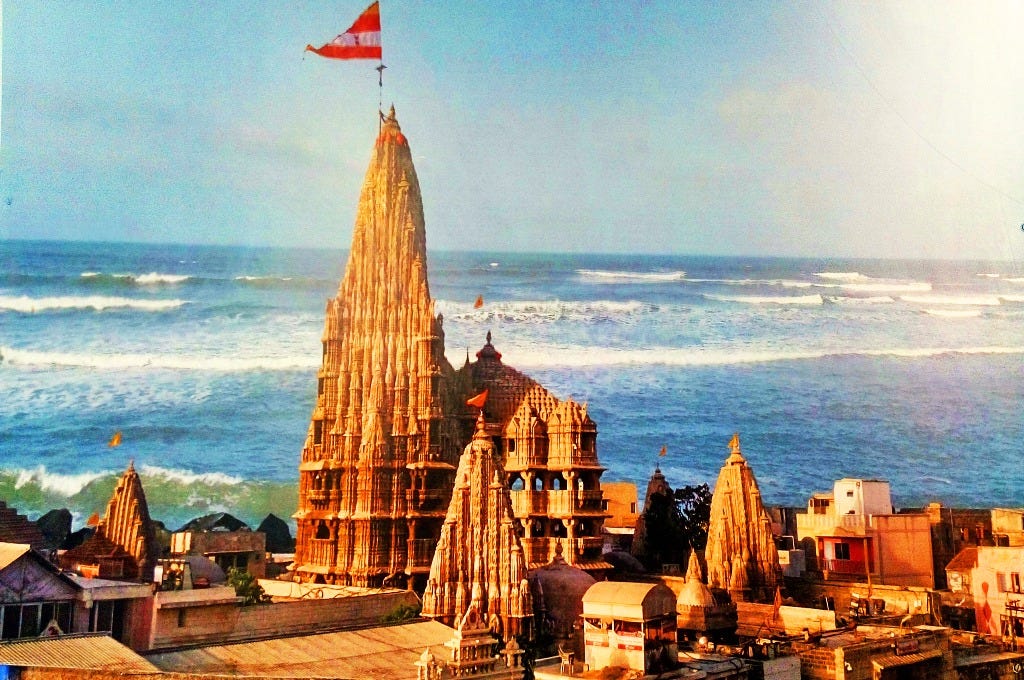
Devotees from all over the country visit the Dwarkadhish Temple to offer prayers and seek blessings. The atmosphere inside the temple is filled with devotion and spirituality. The rhythmic chanting of hymns, the ringing of bells, and the fragrance of incense create a divine ambiance. Pilgrims participate in daily rituals and ceremonies, including the Mangla Aarti, which is performed early in the morning to wake up the deity.
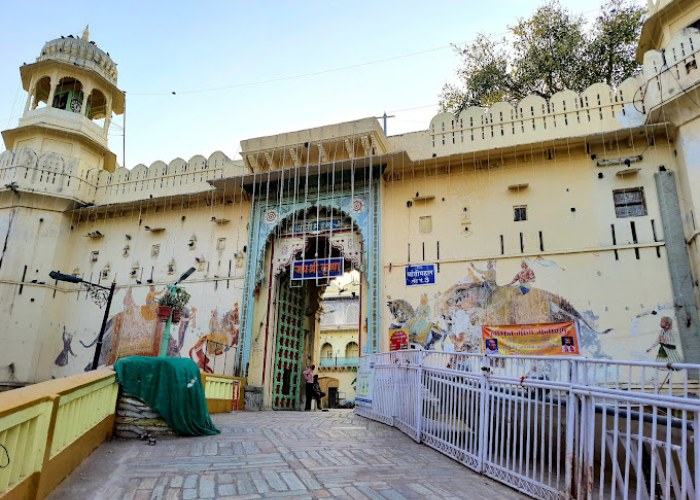
One of the unique features of the temple is its two main entrances: the Swarga Dwar, which means “Gate to Heaven,” and the Moksha Dwar, which means “Gate to Liberation.” Pilgrims traditionally enter through the Swarga Dwar and exit through the Moksha Dwar, symbolizing the journey towards spiritual liberation.
The temple is especially crowded during the Janmashtami festival, which celebrates the birth of Lord Krishna. During this time, the temple is beautifully decorated, and various cultural and religious events take place, attracting thousands of devotees.
The Dwarkadhish Temple not only holds religious importance but also stands as a symbol of India’s rich cultural and historical heritage. It continues to inspire and attract people with its spiritual significance and architectural splendor.