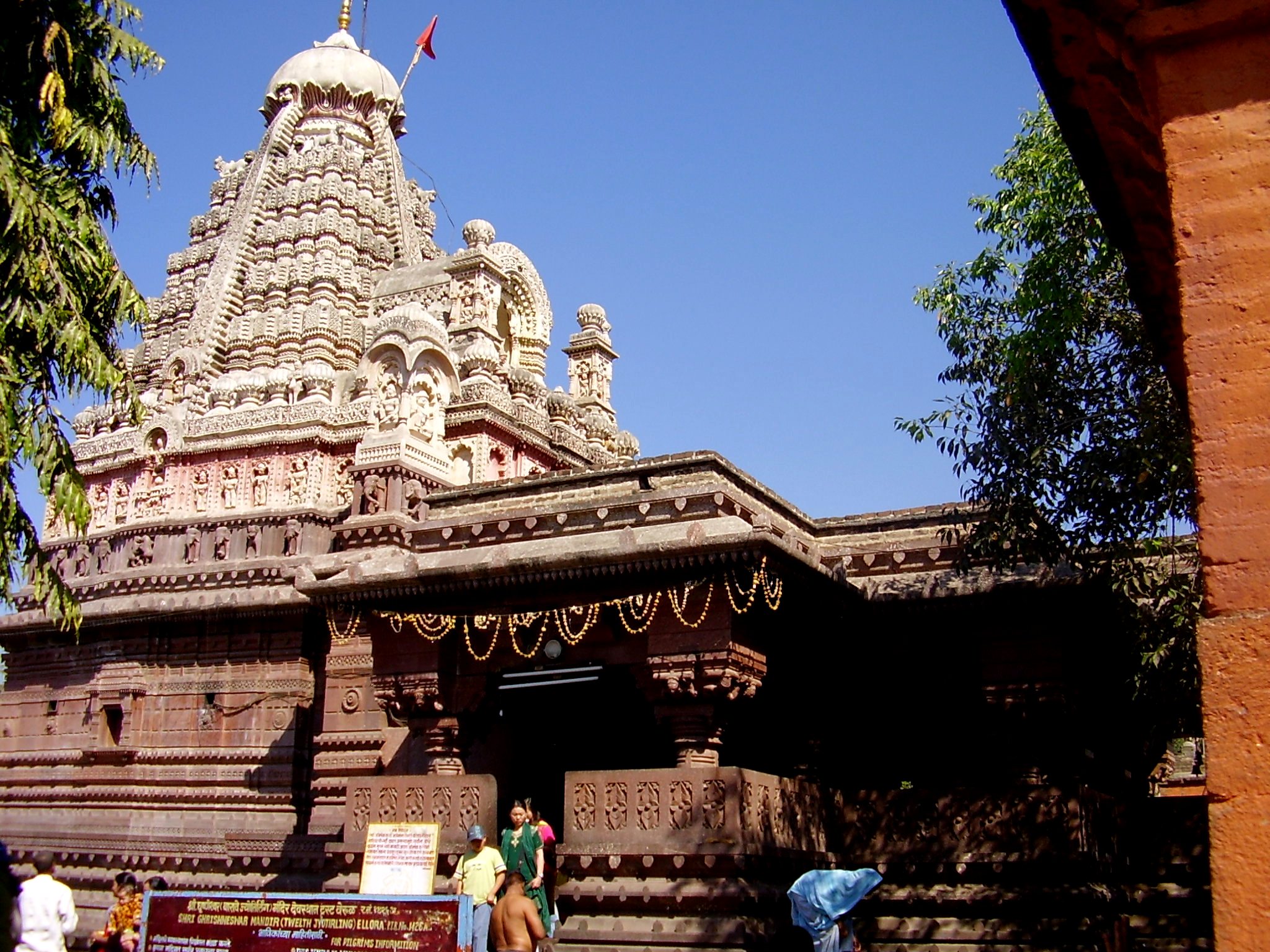
Grishneshwar Temple, located in the village of Ellora in Maharashtra, India, is a revered Hindu shrine dedicated to Lord Shiva. This temple is particularly significant as it is the twelfth and last of the Jyotirlingas, the most sacred abodes of Shiva. Devotees from across the country and beyond come to this temple to seek blessings and experience its serene and spiritual ambiance.
The history of Grishneshwar Temple is steeped in legend and devotion. According to mythology, the temple was built by a devout woman named Kusuma, who used to worship a Shiva Linga she fashioned out of sand. Impressed by her devotion, Lord Shiva manifested himself as a Jyotirlinga, making the site a holy place for his worship. The temple has been rebuilt several times throughout history, with the current structure being renovated in the 18th century by Ahilyabai Holkar, a Maratha queen known for her piety and dedication to temple restoration.
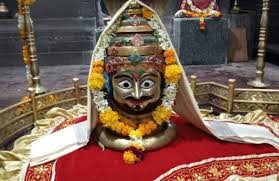
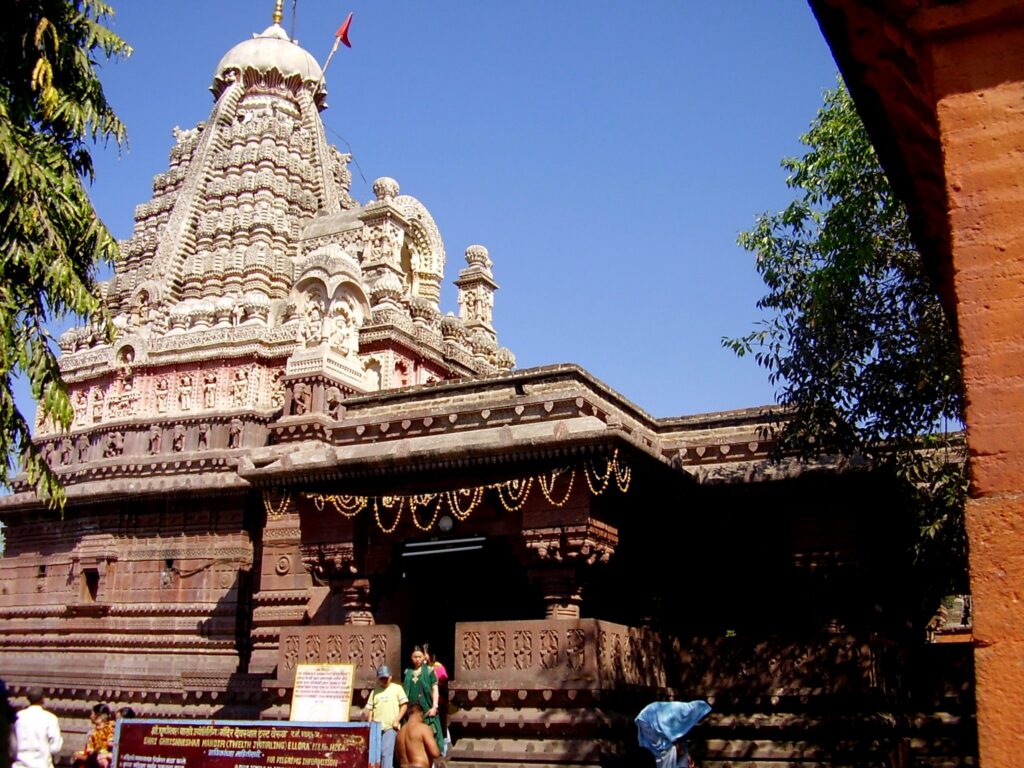
Grishneshwar Temple is a testament to the architectural brilliance of South Indian temple design. The temple’s structure, with its tiered spire and ornate carvings, reflects the artistic traditions that have flourished in the region over centuries. The intricate sculptures that adorn the temple walls depict scenes from Hindu mythology, including episodes from the life of Lord Shiva, the Mahabharata, and the Ramayana. These carvings are not merely decorative; they serve as a visual scripture, imparting moral and spiritual lessons to those who come to worship. The sanctum sanctorum, where the Jyotirlinga resides, is the spiritual heart of the temple, a place where the divine energy of Shiva is said to be most potent.
Grishneshwar Temple comes alive during the festival of Maha Shivaratri, a night dedicated to the worship of Lord Shiva. During this auspicious time, thousands of devotees gather at the temple to participate in special rituals, including the Abhishekam, where the Shiva Linga is bathed in milk, honey, and other sacred offerings. The temple is beautifully decorated with lights, flowers, and vibrant rangoli designs, creating an atmosphere of joy and reverence. Chants of ‘Om Namah Shivaya’ echo through the temple, filling the air with a sense of divine presence. For devotees, Maha Shivaratri at Grishneshwar is not just a festival but a profound spiritual experience, a time to seek blessings, reflect on their spiritual journey, and renew their devotion to Lord Shiva.
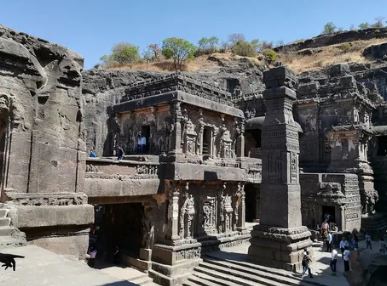
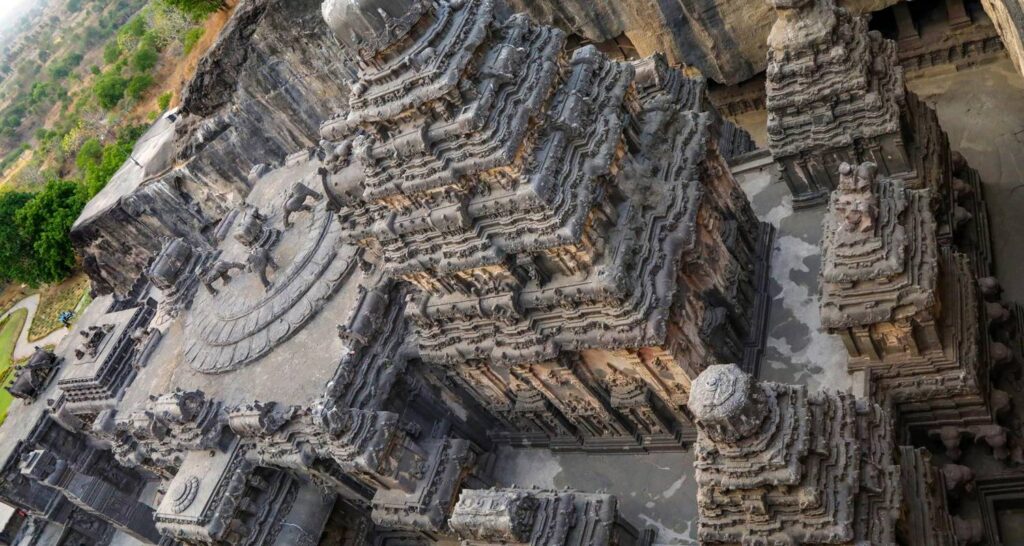
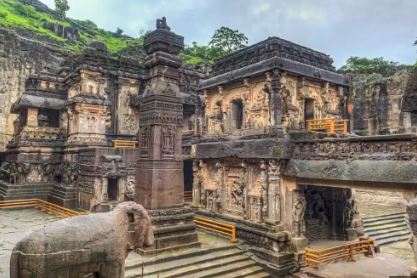
The proximity of Grishneshwar Temple to the Ellora Caves adds another layer of historical and cultural significance to the site. The Ellora Caves, a UNESCO World Heritage site, are a complex of rock-cut temples and monasteries that represent the religious and artistic achievements of ancient India. The presence of Buddhist, Hindu, and Jain monuments at Ellora reflects the religious harmony that existed in the region. The Kailasa temple, a monolithic structure dedicated to Lord Shiva, is one of the most impressive examples of rock-cut architecture and is often associated with the divine presence of Shiva worshipped at Grishneshwar. Together, Grishneshwar Temple and Ellora Caves form a sacred landscape that has drawn pilgrims, scholars, and travelers for centuries.
A pilgrimage to Grishneshwar Temple is a journey of deep spiritual significance. For many, the temple is not just a destination but a place where the soul finds solace and the heart is filled with divine love. The serene ambiance of the temple, combined with the powerful presence of the Jyotirlinga, provides a space for introspection, prayer, and connection with the divine. As pilgrims offer their prayers, they are reminded of the eternal nature of Shiva and the importance of living a life of righteousness and devotion. The journey to Grishneshwar is a reminder that the path to the divine is one of faith, perseverance, and unwavering commitment to spiritual values.
Grishneshwar Temple is not just a spiritual center but also a hub of cultural activity. The temple plays a vital role in the local community, hosting festivals, cultural programs, and religious discourses that bring people together. The traditions of music, dance, and storytelling associated with the temple help preserve the rich cultural heritage of the region. The temple also supports local artisans and craftspeople, whose skills in stone carving, sculpture, and temple decoration have been passed down through generations. In this way, Grishneshwar Temple serves as a living repository of India’s spiritual and cultural traditions, nurturing the soul of the community and keeping the flame of devotion alive.
Grishneshwar Temple stands as a beacon of enduring faith and devotion, a place where the divine energy of Lord Shiva is palpably felt by all who enter its sacred precincts. It is a temple that has witnessed the ebb and flow of history, yet remains a constant source of spiritual strength for devotees. Whether one comes to seek blessings, to meditate on the divine, or to marvel at the temple’s architectural beauty, Grishneshwar offers a profound experience that touches the heart and uplifts the spirit. For those who undertake the pilgrimage to this sacred Jyotirlinga, Grishneshwar Temple is more than a place of worship it is a gateway to the eternal, where the soul finds peace, purpose, and a deeper connection with the divine.