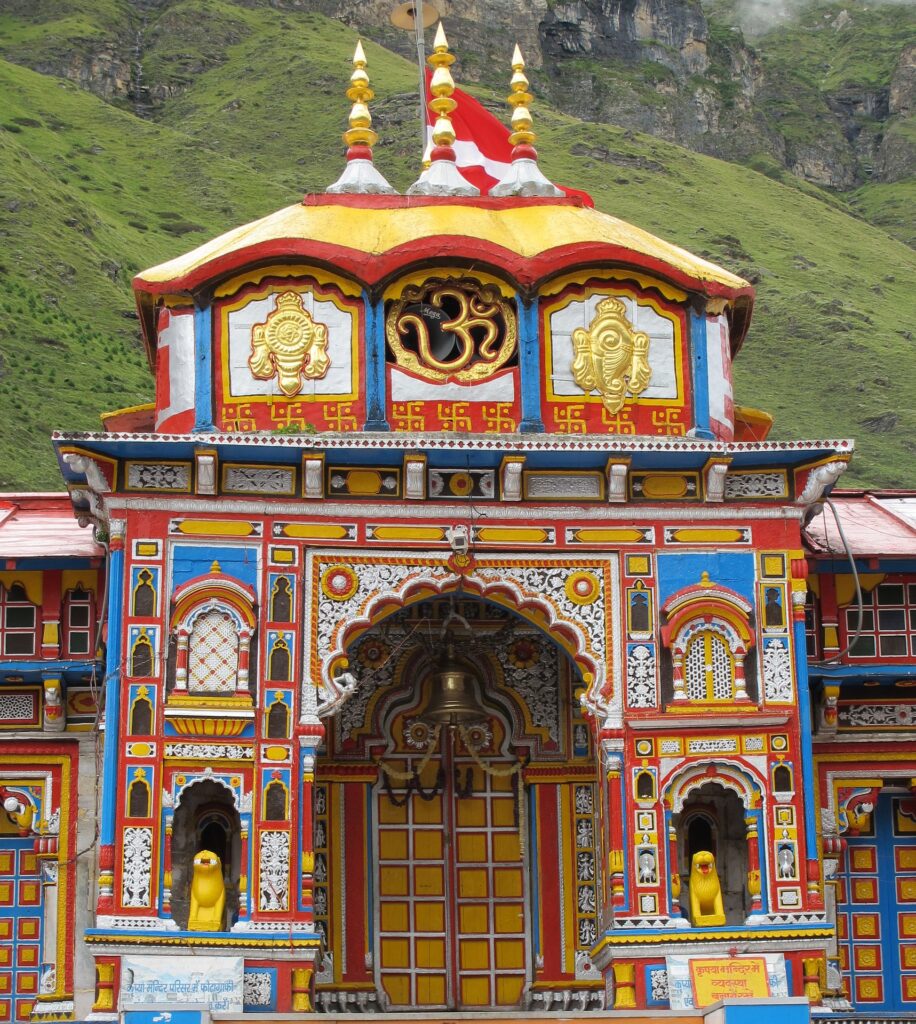
Badrinath Temple, an epitome of spiritual significance and architectural grandeur, stands majestically in the town of Badrinath, Uttarakhand. As one of the holiest shrines in Hinduism, it forms a crucial part of the Char Dham pilgrimage circuit, attracting devotees from all corners of the world. Nestled at an awe-inspiring altitude of 3,300 meters (10,827 feet) above sea level in the Garhwal Himalayas, the temple is surrounded by breathtaking vistas of snow-capped peaks and the serene flow of the Alaknanda River, adding to its divine ambiance.
The history of Badrinath Temple is deeply rooted in Hindu mythology. It is believed to be the abode of Lord Vishnu, who, according to legends, meditated here for thousands of years under the Badri tree to attain spiritual enlightenment. This sacred site is also associated with the great sage Adi Shankaracharya, who is credited with re-establishing the temple in the 8th century. The temple’s vibrant facade, adorned with colorful paintings and intricate carvings, captures the essence of traditional Hindu temple architecture. The entrance gate, known as the Singhdwar, leads to the sanctum sanctorum, where the black stone idol of Lord Badrinarayan stands, flanked by the idols of Nar and Narayan, the dual forms of Vishnu.
The spiritual journey to Badrinath Temple is considered a path to salvation (Moksha) by devotees. The temple remains open for six months each year, from late April to early November, due to the extreme weather conditions in the region. During this period, thousands of pilgrims undertake the arduous journey, braving challenging terrains and unpredictable weather, to seek the blessings of Lord Vishnu. The opening and closing ceremonies, marked by grand rituals and Vedic chants, are significant events that draw large crowds.
Inside the temple, the atmosphere is calm and filled with devotion. People chant hymns, light incense, and ring bells, creating a divine feeling. Devotees pray, perform rituals, and bathe in the Tapt Kund, a natural hot spring believed to have healing powers, located just below the temple. The temple complex also has several smaller shrines dedicated to various gods, each adding to the rich tradition of Hindu mythology and worship practices.
The temple’s location in the picturesque valley, surrounded by the Nar and Narayan mountain ranges, not only enhances its spiritual aura but also highlights the harmonious coexistence of nature and divinity. The pilgrimage to Badrinath is not just a religious obligation but a journey of faith, devotion, and self-discovery. It offers an opportunity for devotees to detach from worldly concerns and immerse themselves in the divine presence of Lord Vishnu.
Badrinath Temple stands as a beacon of faith, devotion, and cultural heritage. It encapsulates the profound spiritual traditions of Hinduism, offering solace and enlightenment to countless devotees. The temple’s timeless appeal, coupled with its majestic surroundings, continues to inspire and uplift the souls of those who visit, making it a cherished destination in the spiritual landscape of India.