Kanchipuram, often referred to as the “City of a Thousand Temples,” is one of the most sacred and historically significant towns in India. Among its many revered shrines, the Varadaraja Perumal Temple stands out as a monument of immense spiritual importance, architectural grandeur, and cultural heritage. Dedicated to Lord Vishnu, who is worshipped here as Varadaraja Perumal, this temple is not just a place of worship but a vibrant center of devotion, attracting pilgrims from all over the world. The temple is located in the heart of Kanchipuram, a town steeped in spiritual history and home to many ancient temples that have played a significant role in shaping the religious and cultural landscape of South India.
The Varadaraja Perumal Temple, also known as Hastagiri or Attiyuran, is one of the 108 Divya Desams, the sacred abodes of Lord Vishnu revered in Vaishnavism. This temple is particularly significant because it is believed to have been established by the great Vaishnava saint, Ramanuja, who spent several years here spreading the teachings of Vishishtadvaita philosophy. The temple’s origins date back over a thousand years, with its initial construction attributed to the Chola dynasty, followed by expansions and renovations under the Vijayanagara Empire. The temple’s architecture is a magnificent blend of Dravidian and Vijayanagara styles, characterized by towering gopurams (gateway towers), intricately carved pillars, and expansive courtyards.
The temple’s sanctum sanctorum houses the deity of Lord Varadaraja Perumal, who is depicted in a standing posture, blessing devotees with his right hand while holding a conch and discus in his other hands. The idol is made of stone and is said to possess a divine aura that fills the hearts of devotees with peace and devotion. The main deity is also referred to as “Perarulalan,” meaning the “Supreme Bestower of Boons,” reflecting the belief that Lord Varadaraja Perumal grants the wishes of those who pray to him with sincerity and devotion. The sanctity of this temple is further enhanced by the presence of two lizards, one gold and one silver, on the ceiling of the sanctum. According to legend, touching these lizards brings good fortune and absolves devotees of their past sins.
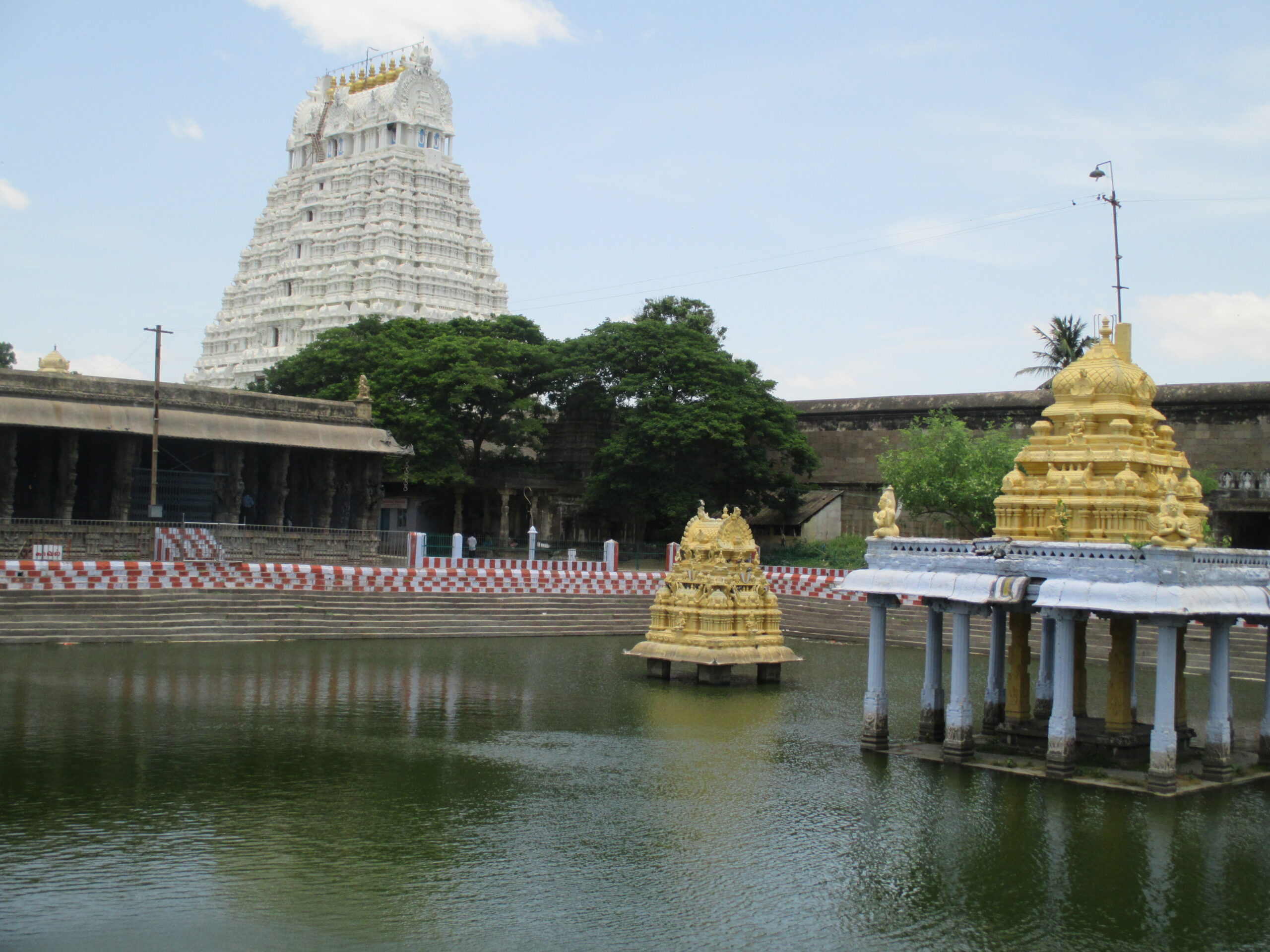
One of the most intriguing aspects of the Varadaraja Perumal Temple is its association with the mystical Athi Varadar, a rare form of Lord Vishnu made from the wood of the fig tree (Athi). This ancient idol, which is believed to be over a thousand years old, is kept submerged in the Anantha Sarovara, the temple tank, and is brought out for public worship once every 40 years. The Athi Varadar festival is a grand event that draws millions of devotees from all over the world, eager to catch a glimpse of the deity and seek his blessings. The atmosphere during this festival is charged with devotion and excitement, as the temple becomes the focal point of spiritual energy and communal worship.
The Varadaraja Perumal Temple is also renowned for its architectural marvels, particularly the grand 100-pillared hall, which is a testament to the craftsmanship of the Vijayanagara artisans. Each pillar is intricately carved with scenes from Hindu mythology, depicting stories of gods, goddesses, and celestial beings. The hall is not just an architectural masterpiece but also serves as a venue for various temple rituals and cultural events. The temple’s gopurams, with their towering heights and elaborate carvings, are another highlight, symbolizing the grandeur and divine presence of Lord Varadaraja Perumal. These gopurams are visible from a distance and serve as a beacon for devotees, guiding them to the sacred temple.
The temple complex is vast, covering several acres, and includes multiple shrines, each dedicated to different deities. The shrine of Perundevi Thayar, the consort of Lord Varadaraja Perumal, is of particular importance. Devotees believe that worshipping Thayar, the embodiment of compassion and grace, brings prosperity and happiness to their lives. The temple also houses a shrine dedicated to Lord Narasimha, the fierce avatar of Lord Vishnu, who is worshipped here for his protective power. The presence of these various shrines within the temple complex adds to its spiritual richness, offering devotees a holistic experience of worship and devotion.
One of the unique features of the Varadaraja Perumal Temple is the annual Garuda Sevai, a grand procession in which the deity is carried on a large Garuda (mythical eagle) vehicle around the temple streets. This event is celebrated with great pomp and fervor, attracting thousands of devotees who come to witness the Lord in all his splendor. The Garuda Sevai is symbolic of Lord Vishnu’s role as the protector of the universe, and it is believed that participating in this procession brings divine protection and blessings. The festival is accompanied by traditional music, chanting of hymns, and the distribution of prasadam (sacred food), creating an atmosphere of joy and devotion.
The temple also has a deep connection with the Tamil Alvars, the saint-poets who composed hymns in praise of Lord Vishnu. The Varadaraja Perumal Temple is mentioned in several of these hymns, highlighting its spiritual significance and the deep devotion that the Alvars had for the deity. These hymns, collectively known as the Divya Prabandham, are still recited in the temple as part of the daily rituals, connecting devotees with the rich spiritual heritage of the region. The temple’s association with the Alvars adds another layer of spiritual depth, as their hymns express profound devotion and offer insights into the divine nature of Lord Vishnu.
In addition to its religious and spiritual significance, the Varadaraja Perumal Temple is also a center of cultural activities. The temple hosts various festivals throughout the year, each with its unique rituals, processions, and cultural performances. These festivals are a reflection of the vibrant cultural heritage of Kanchipuram and offer visitors a chance to witness the confluence of spirituality and tradition. The temple’s involvement in these cultural activities ensures that the traditions and customs associated with the worship of Lord Vishnu are preserved and passed down through generations.
The spiritual experience at the Varadaraja Perumal Temple is further enhanced by the serene and tranquil environment of Kanchipuram. The town, with its ancient temples, narrow streets, and traditional houses, exudes a sense of timelessness and spirituality. The temple’s surroundings, with their lush greenery and the gentle flow of the temple tank’s waters, create a peaceful ambiance that allows devotees to connect with the divine on a deeper level. The combination of the temple’s sacred atmosphere, its historical significance, and the natural beauty of its surroundings makes it a place where spirituality and serenity come together in perfect harmony.
Visiting the Varadaraja Perumal Temple is more than just a religious pilgrimage; it is a journey into the heart of India’s spiritual and cultural heritage. The temple’s rich history, its association with great saints and scholars, and its role as a center of devotion and learning make it a place of immense significance for devotees and spiritual seekers. The temple’s architectural beauty, its sacred rituals, and its vibrant festivals offer a glimpse into the deep and enduring traditions of Vaishnavism, inviting visitors to immerse themselves in a world of devotion and divine grace.
In conclusion, the Kanchipuram Varadaraja Perumal Temple stands as a beacon of spiritual light, guiding devotees on their journey towards divine realization. Its significance as one of the 108 Divya Desams, its rich history, and its deep connection with the teachings of Vaishnavism make it a place of pilgrimage that holds a special place in the hearts of millions of devotees. The temple’s architectural splendor, its sacred rituals, and its vibrant cultural traditions create an environment where the divine presence of Lord Vishnu is felt in every corner. For those seeking a deeper connection with the divine, the Varadaraja Perumal Temple offers a spiritual experience that is both profound and transformative, leaving a lasting impression on the soul.
The temple is not just a monument of the past but a living tradition, where the divine energy of Lord Vishnu continues to be worshipped and celebrated. The enduring appeal of the Varadaraja Perumal Temple lies in its ability to connect the past with the present, offering a timeless sanctuary where the soul can find peace, devotion, and the blessings of the Supreme Lord.